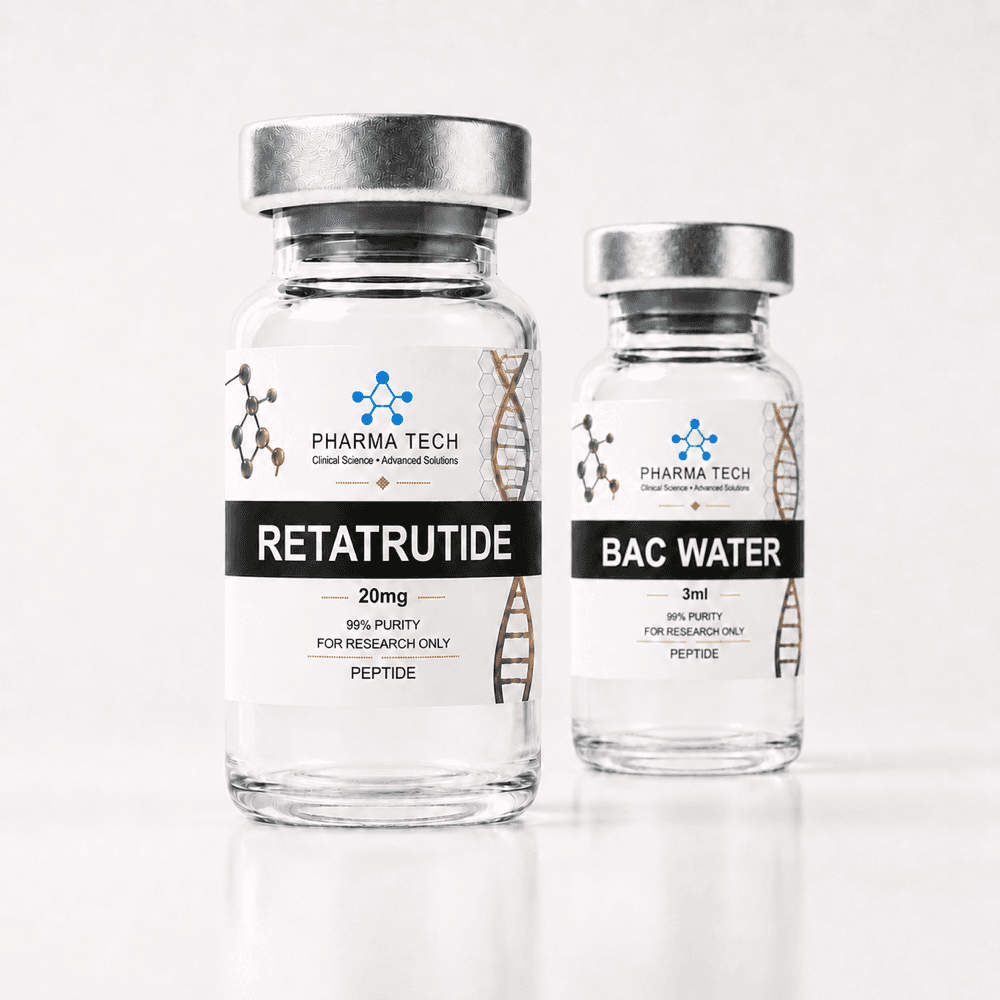
$200
/ vialIncludes a 3ml bacteriostatic (BAC) water vial
Strength
Research Use Only. For research use only. Consult a licensed physician.
Overview
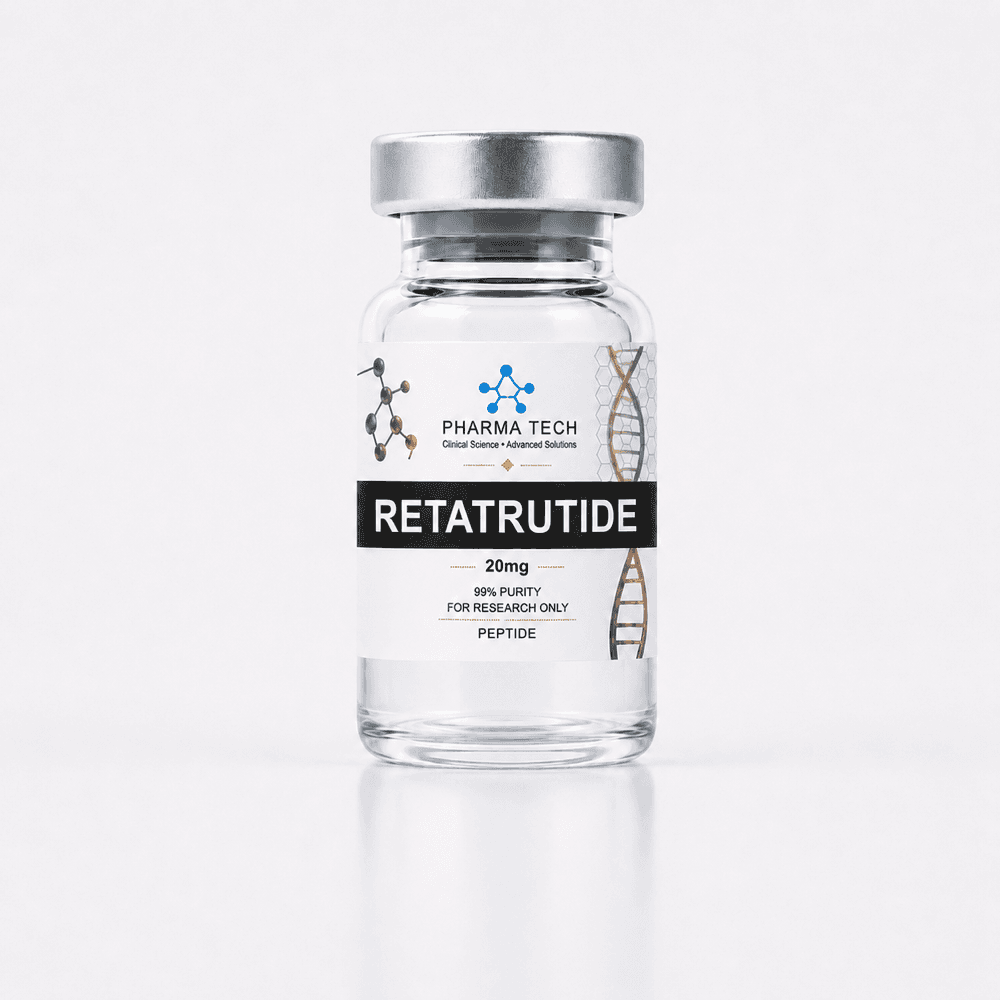
An investigational once-weekly triple agonist developed by Eli Lilly, currently in Phase 3 trials — not an FDA-approved drug. Activates GIP, GLP-1 and glucagon receptors simultaneously, combining appetite suppression with increased energy expenditure via the glucagon receptor component, which distinguishes it from single- or dual-agonist molecules.
Studied for
Described as research context — not a treatment claim.Body weight and composition, glycemic control in type 2 diabetes, liver fat reduction in MASLD, and as an adjunct in knee osteoarthritis with obesity. Phase 3 TRIUMPH-4 data (2025) showed up to 28.7% average weight reduction at the highest doses; Phase 2 liver-fat data showed up to 82% reduction.
Evidence & compliance note
This is Eli Lilly's investigational drug candidate, not an approved medication — research literature is strong (multiple completed Phase 3 trials) but the compound itself remains unapproved for clinical use.
Preparation & storage
Lyophilized. Reconstitute with bacteriostatic water per the general reference below.
General reconstitution & storage reference for lyophilized peptides:
- 1Reconstitute with bacteriostatic water (0.9% benzyl alcohol) rather than plain sterile water — the preservative meaningfully extends usable shelf life.
- 2In bacteriostatic water, refrigerate at 2–8°C, typically usable for ~28–30 days. In plain sterile water (no preservative): 7–14 days.
- 3Lyophilized (unmixed) vials are stable at refrigerated or, for some peptides, frozen temperatures for extended periods prior to reconstitution.
- 4Avoid repeated freeze-thaw cycles, direct light/UV exposure, and heat — these are the primary drivers of peptide degradation.
- 5Reconstitute gently: inject the water down the inside wall of the vial and swirl — don't shake, which can denature the peptide structure.
Precautions
GI side effects (nausea, vomiting, diarrhea) are common across this drug class; discontinuation-due-to-adverse-events rates of 2–5% were reported in trials. As an investigational compound, long-term human safety data is incomplete.