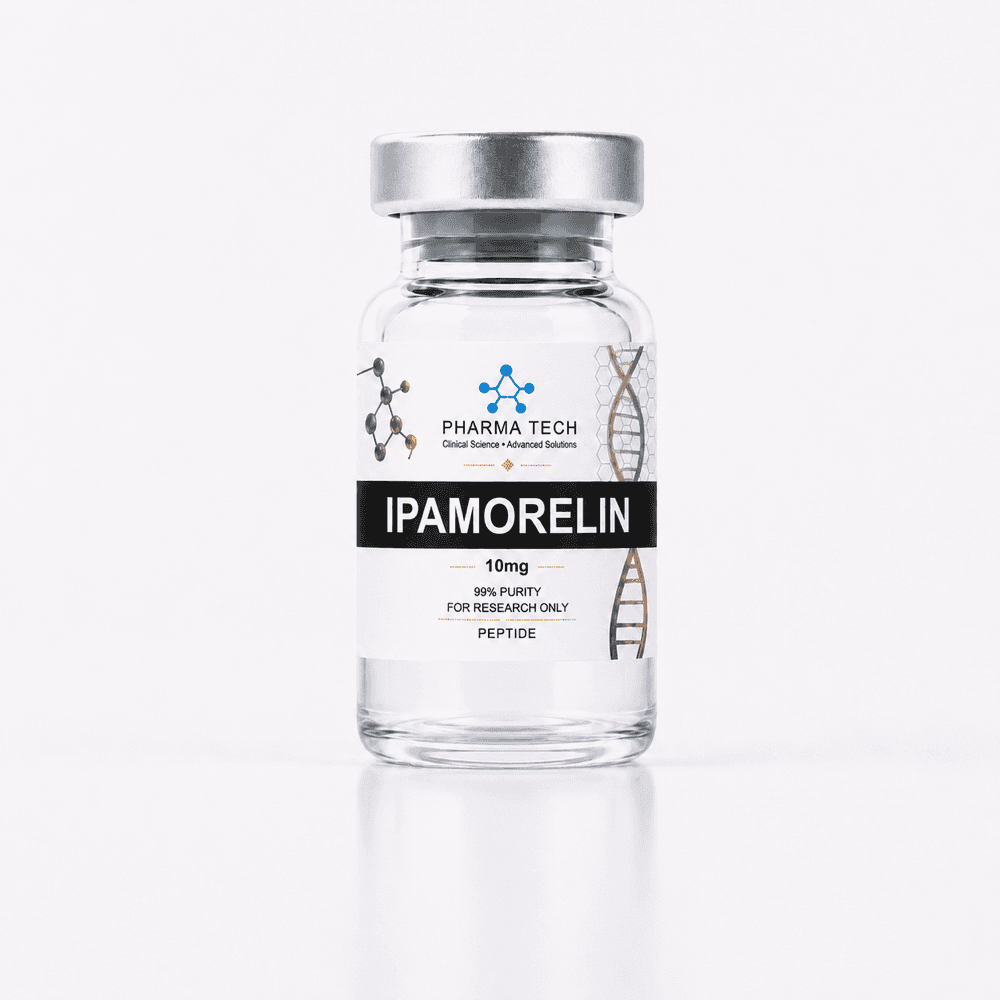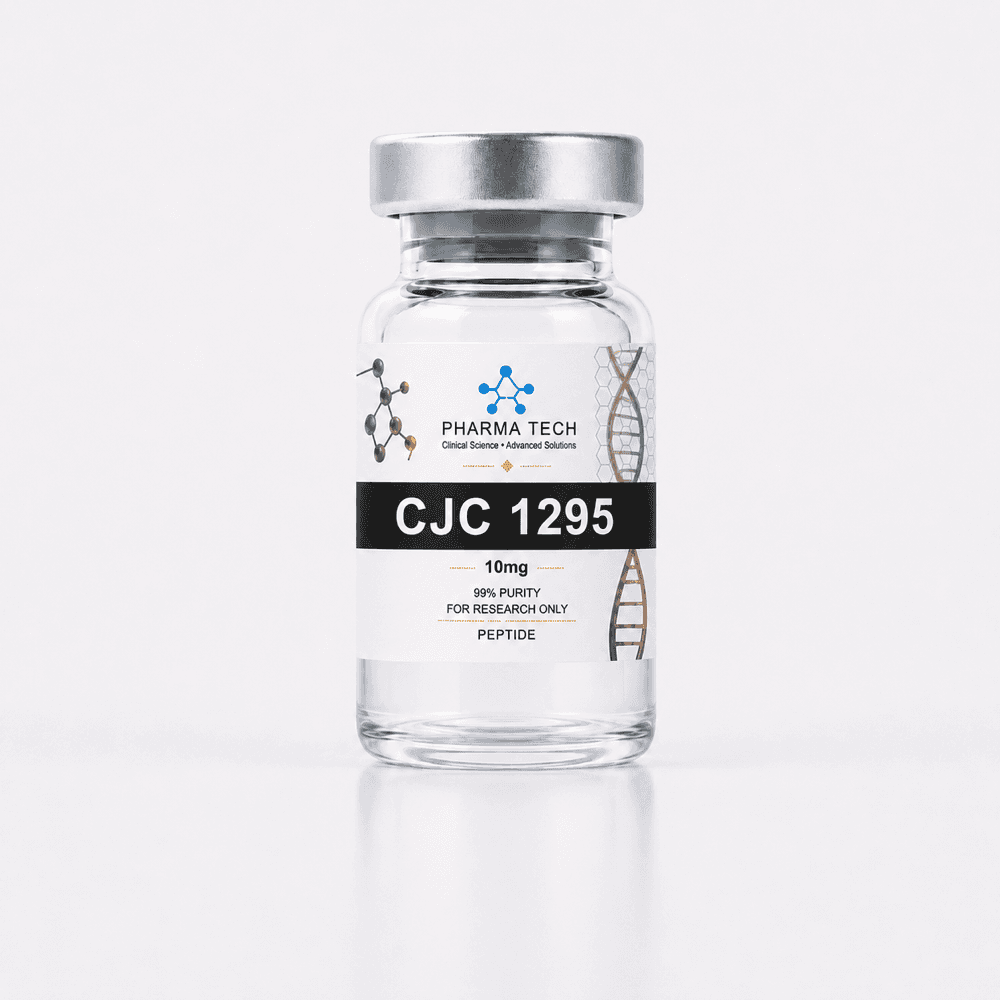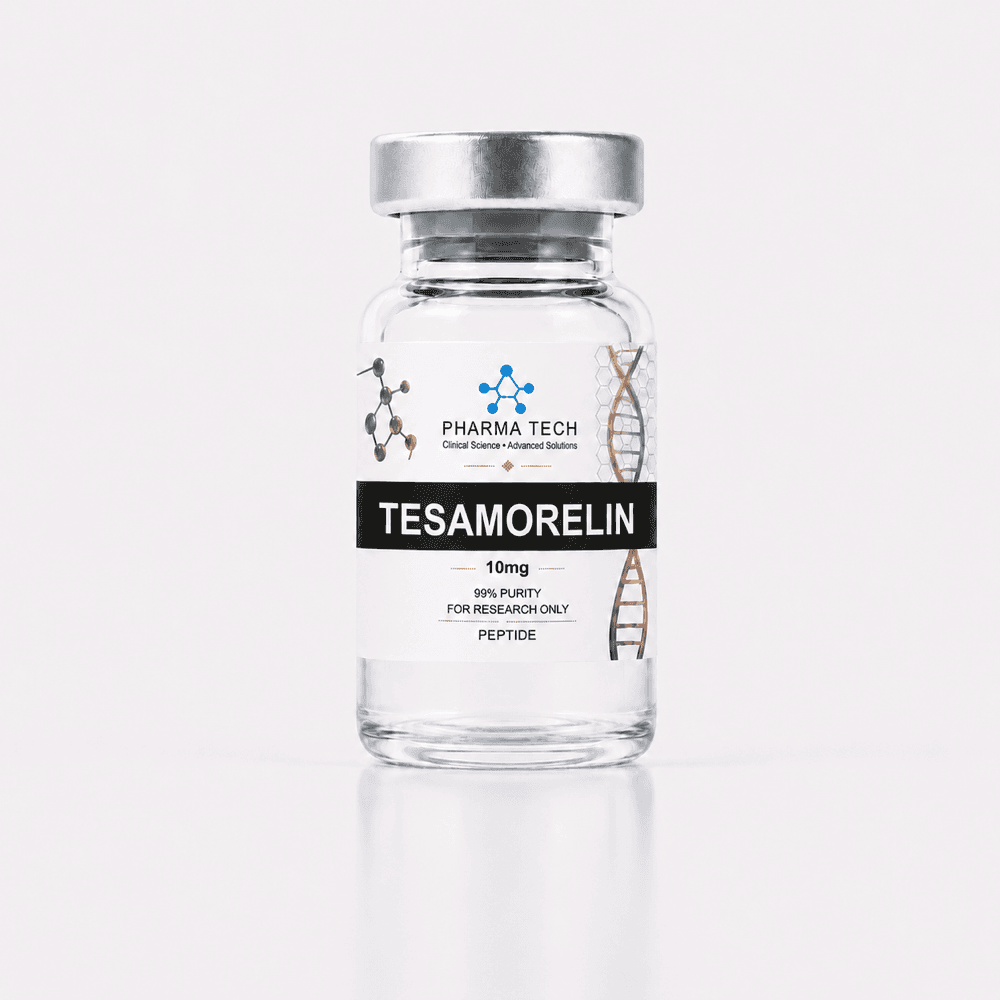
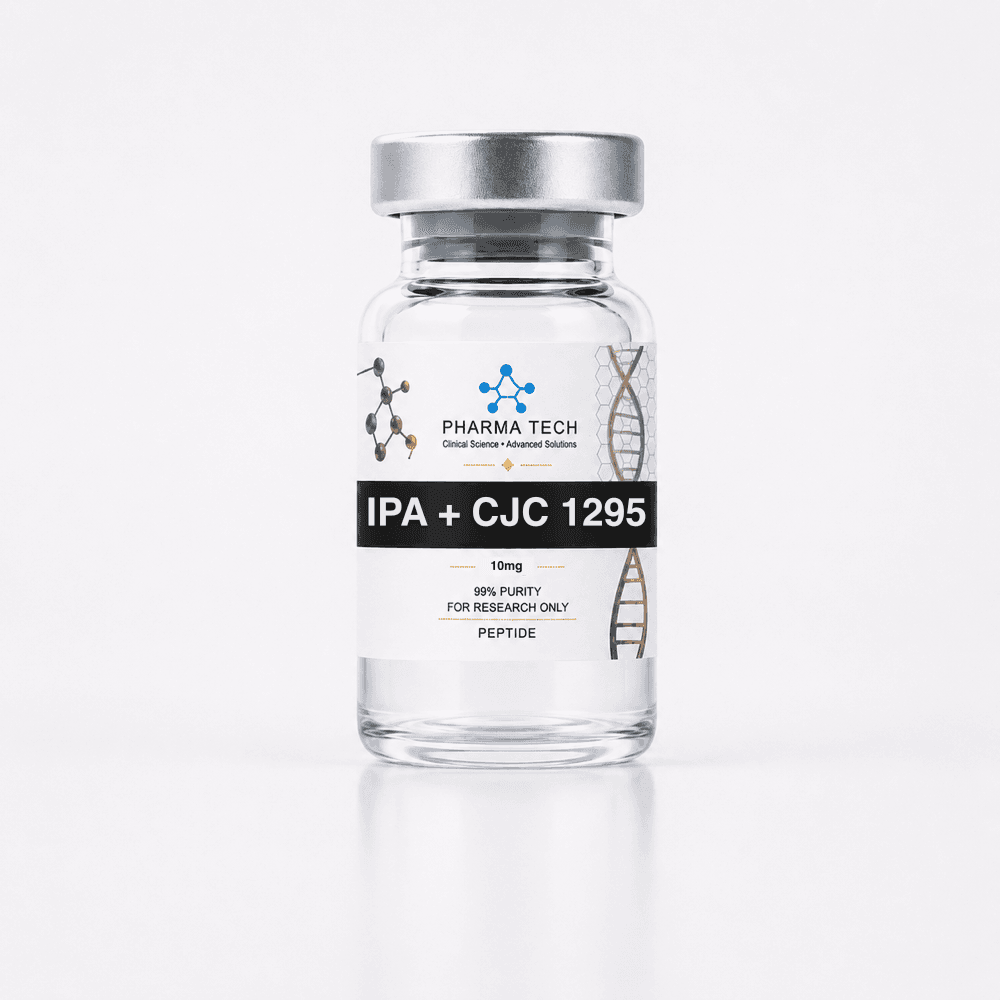
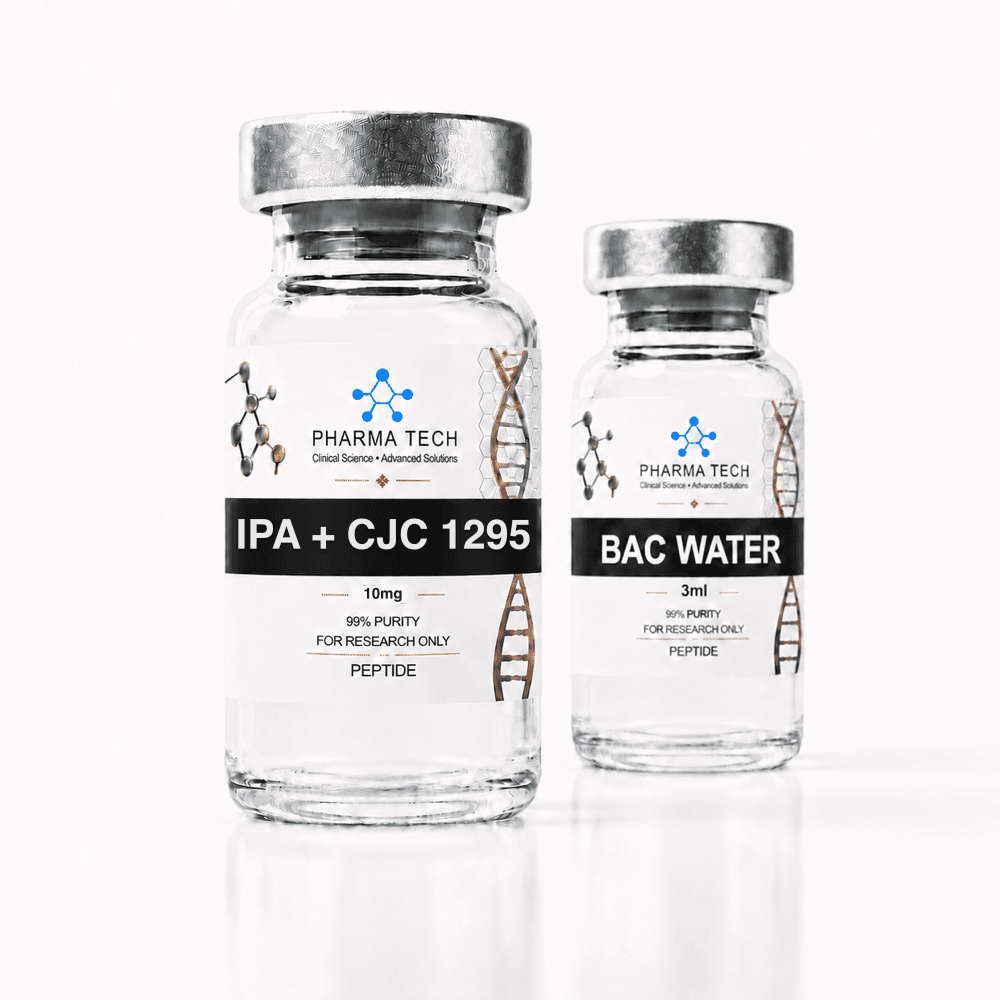
Ipamorelin + CJC-1295 (No DAC)
10mg per vial
SKU: PT-IPCND10
$140
/ vialIncludes a 3ml bacteriostatic (BAC) water vial
Research Use Only. For research use only. Consult a licensed physician.
Overview
A PharmaTech-formulated blend of the two compounds most often paired in the GH-axis literature: Ipamorelin, a selective ghrelin-receptor pentapeptide, and CJC-1295 without DAC, a short-acting GHRH analog. The two act on different receptors of the same axis: CJC-1295 binds pituitary GHRH receptors while Ipamorelin binds GHS-R1a. Combining a GHRH analog with a GHRP is studied because the pair produces a larger and more naturalistic pulse than either compound alone.
Studied for
Described as research context — not a treatment claim.GH pulsatility, body composition, sleep quality and recovery — the research areas of its two components.
Evidence & compliance note
Proprietary blend — the exact ratio between the two peptides should be disclosed on the label and on this page before launch. Undisclosed blend ratios draw additional FTC scrutiny.
Preparation & storage
Lyophilized. Short-acting on the GHRH side; research protocols use more frequent dosing than DAC-conjugated variants.
General reconstitution & storage reference for lyophilized peptides:
- 1Reconstitute with bacteriostatic water (0.9% benzyl alcohol) rather than plain sterile water — the preservative meaningfully extends usable shelf life.
- 2In bacteriostatic water, refrigerate at 2–8°C, typically usable for ~28–30 days. In plain sterile water (no preservative): 7–14 days.
- 3Lyophilized (unmixed) vials are stable at refrigerated or, for some peptides, frozen temperatures for extended periods prior to reconstitution.
- 4Avoid repeated freeze-thaw cycles, direct light/UV exposure, and heat — these are the primary drivers of peptide degradation.
- 5Reconstitute gently: inject the water down the inside wall of the vial and swirl — don't shake, which can denature the peptide structure.
Precautions
Inherits the precautions of both components: effects depend on functioning pituitary GH release, and standard GH-axis cautions apply (insulin sensitivity monitoring, water retention, appetite changes).