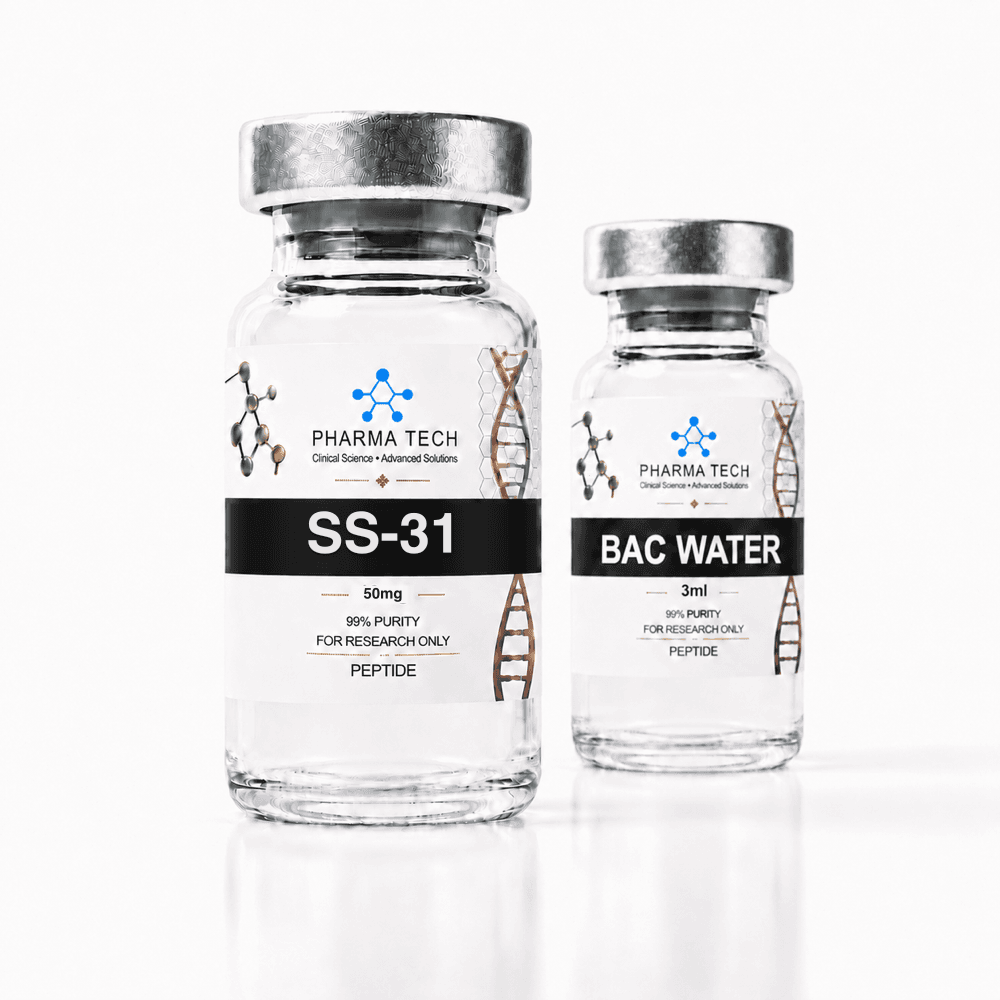
$200
/ vialIncludes a 3ml bacteriostatic (BAC) water vial
Research Use Only. For research use only. Consult a licensed physician.
Overview
An aromatic-cationic tetrapeptide developed by Stealth BioTherapeutics that concentrates in the inner mitochondrial membrane. Unlike the rest of this catalog, elamipretide is an APPROVED MEDICINE: the FDA granted it accelerated approval in September 2025, under the name FORZINITY, for Barth syndrome. Binds cardiolipin, a phospholipid of the inner mitochondrial membrane, and protects its structural integrity. It acts upstream of conventional antioxidants: rather than scavenging free radicals, it preserves the membrane architecture on which efficient respiration depends.
Studied for
Described as research context — not a treatment claim.Barth syndrome — the TAZPOWER trial reported improvement in the 6-minute walk test and in cardiac measures after 48 weeks. Also studied in heart failure with reduced ejection fraction (PROGRESS-HF, which improved a ventricular volume measure but did not meet its primary endpoint), primary mitochondrial myopathy and Friedreich's ataxia.
Evidence & compliance note
APPROVED MEDICINE, for one indication. That it is approved for Barth syndrome says nothing about the uses it is popularly sold for — an approval is specific to an indication, a dose and a population, and does not transfer.
Preparation & storage
Lyophilized. Reconstitute with bacteriostatic water per the general reference below.
General reconstitution & storage reference for lyophilized peptides:
- 1Reconstitute with bacteriostatic water (0.9% benzyl alcohol) rather than plain sterile water — the preservative meaningfully extends usable shelf life.
- 2In bacteriostatic water, refrigerate at 2–8°C, typically usable for ~28–30 days. In plain sterile water (no preservative): 7–14 days.
- 3Lyophilized (unmixed) vials are stable at refrigerated or, for some peptides, frozen temperatures for extended periods prior to reconstitution.
- 4Avoid repeated freeze-thaw cycles, direct light/UV exposure, and heat — these are the primary drivers of peptide degradation.
- 5Reconstitute gently: inject the water down the inside wall of the vial and swirl — don't shake, which can denature the peptide structure.
Precautions
Its approval covers one rare mitochondrial disease in patients weighing at least 30 kg, under medical supervision. The longevity and performance uses for which this compound is popularly discussed are NOT approved indications and have not been established in trials.