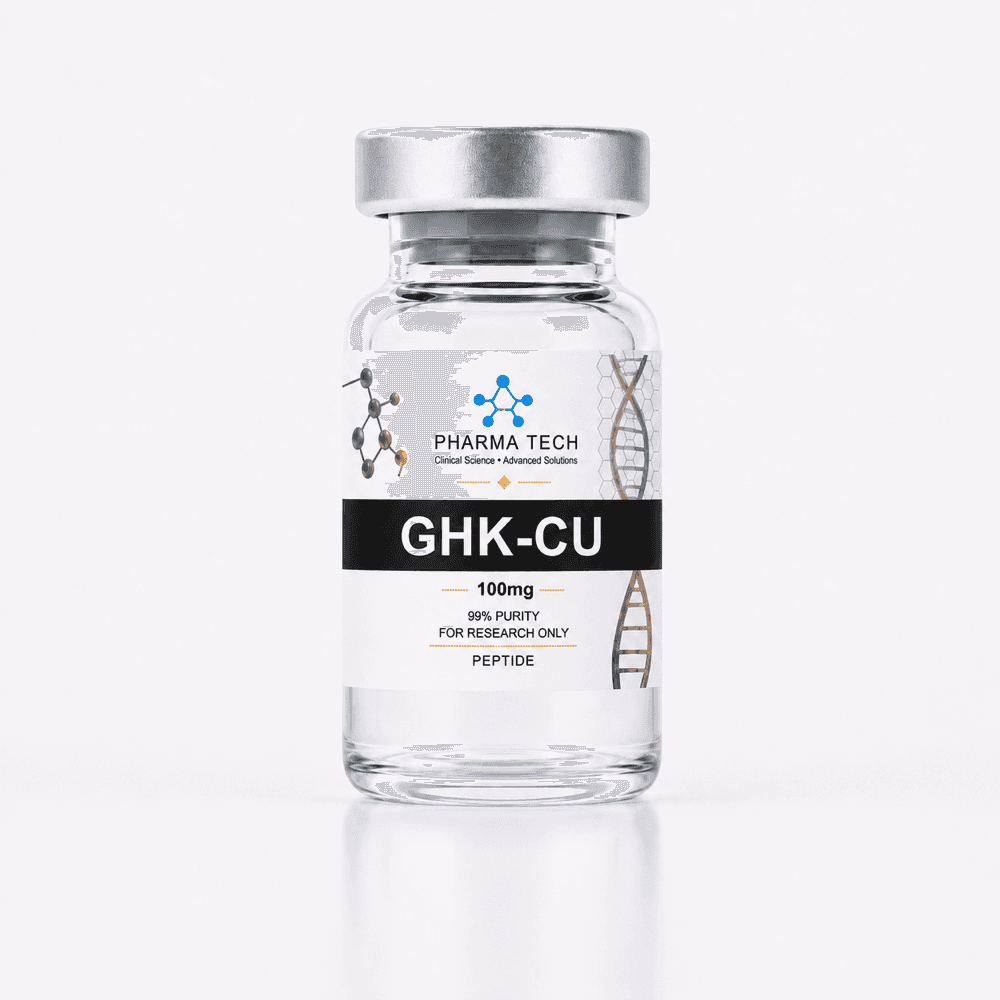
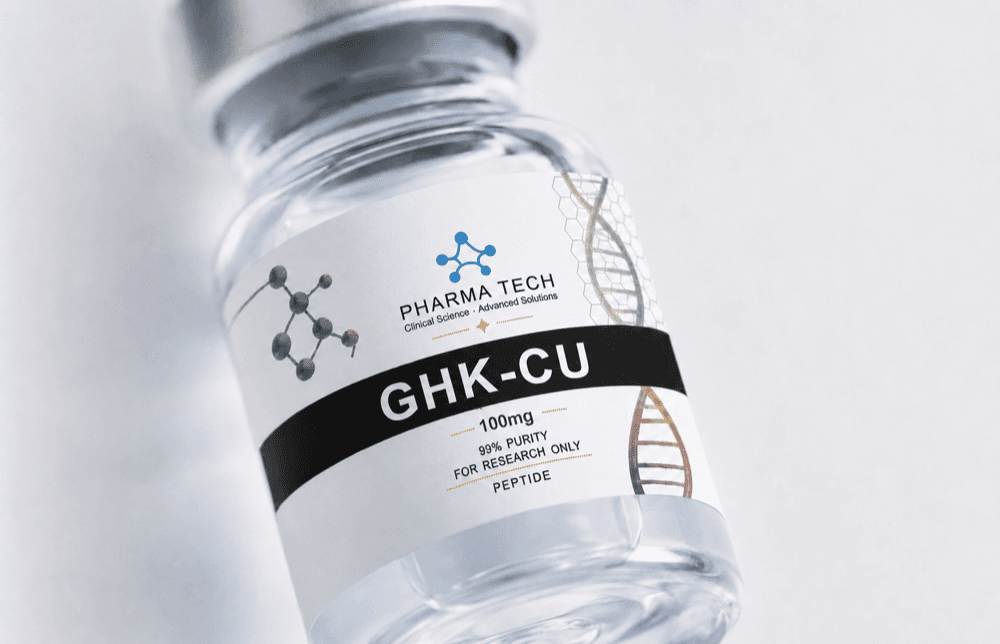
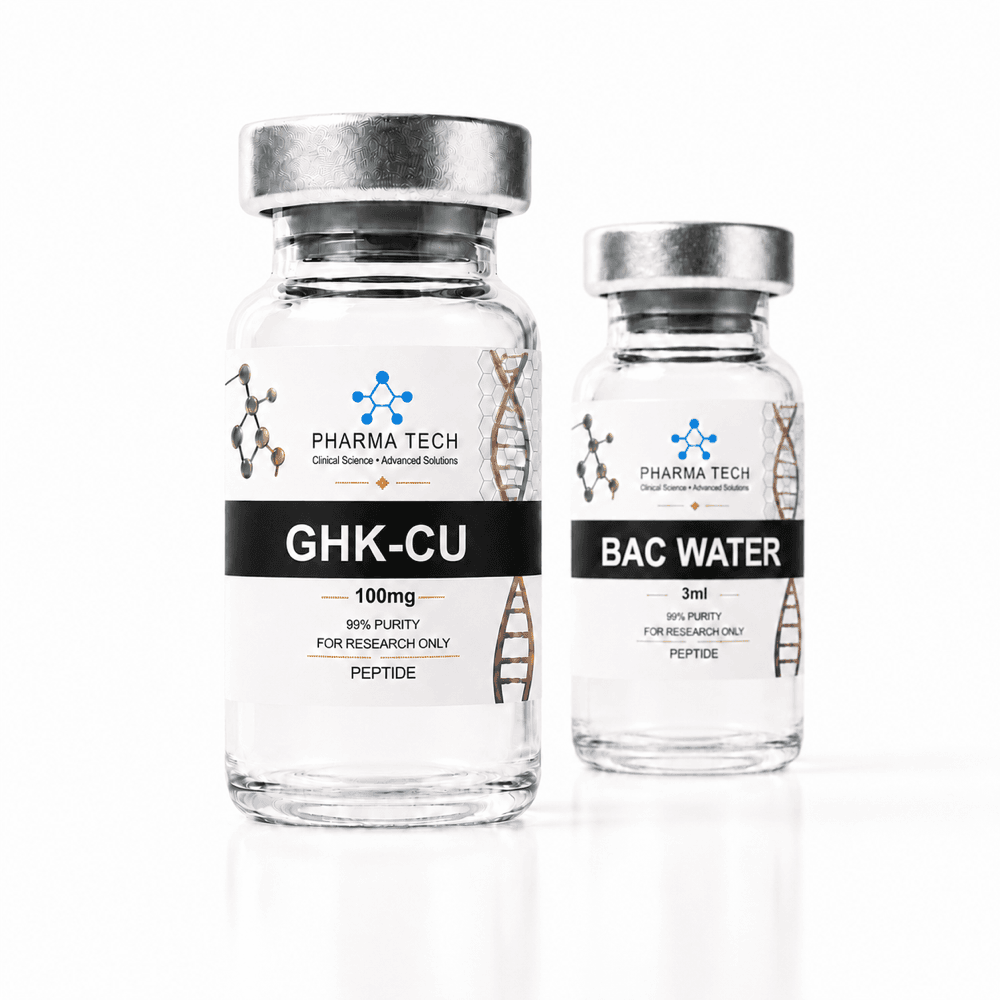
GHK-Cu (Copper Peptide)
100mg per vial
SKU: PT-CU100
$120
/ vialIncludes a 3ml bacteriostatic (BAC) water vial
Research Use Only. For research use only. Consult a licensed physician.
Overview
A naturally occurring copper-binding peptide present in human plasma, saliva, and urine, and one of the more extensively studied compounds in this catalog — including in mainstream cosmetic dermatology. Studied for stimulating collagen and elastin synthesis, supporting antioxidant defenses, and modulating tissue-remodeling gene expression.
Studied for
Described as research context — not a treatment claim.Skin firmness/elasticity, wound healing, and hair-follicle/scalp research — this is the catalog item with the strongest published human (largely topical/cosmetic) evidence base.
Preparation & storage
Lyophilized. Reconstitute with bacteriostatic water per the general reference below.
General reconstitution & storage reference for lyophilized peptides:
- 1Reconstitute with bacteriostatic water (0.9% benzyl alcohol) rather than plain sterile water — the preservative meaningfully extends usable shelf life.
- 2In bacteriostatic water, refrigerate at 2–8°C, typically usable for ~28–30 days. In plain sterile water (no preservative): 7–14 days.
- 3Lyophilized (unmixed) vials are stable at refrigerated or, for some peptides, frozen temperatures for extended periods prior to reconstitution.
- 4Avoid repeated freeze-thaw cycles, direct light/UV exposure, and heat — these are the primary drivers of peptide degradation.
- 5Reconstitute gently: inject the water down the inside wall of the vial and swirl — don't shake, which can denature the peptide structure.
Precautions
Copper-based; general peptide handling precautions apply, along with attention to correct dosing given copper's role as an essential trace mineral (excess systemic copper is a separate consideration from topical/localized use studied in most literature).